Magnolia Landing: Transforming Charleston’s Neck Area into a Vibrant Riverfront Community
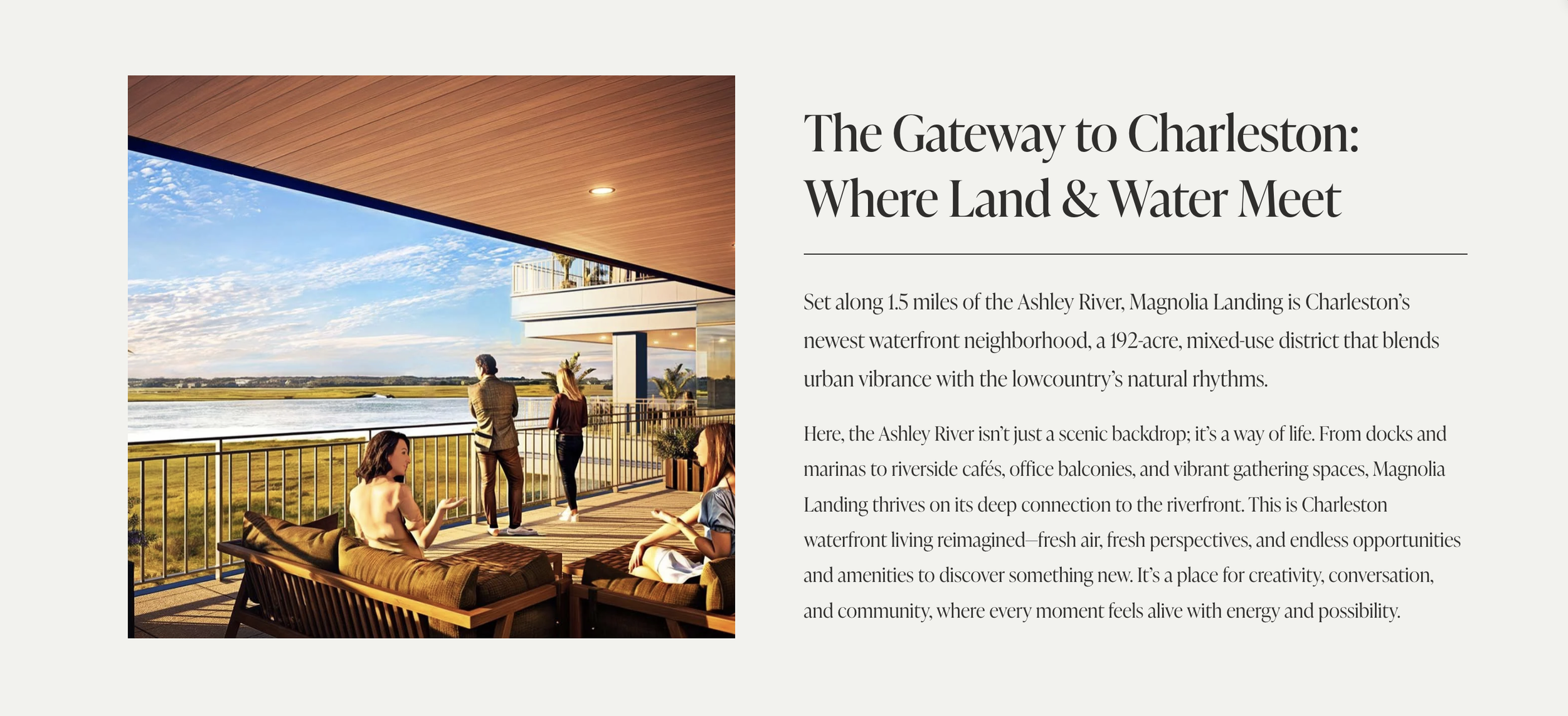
Charleston’s Neck Area, long characterized by its industrial past, is on the cusp of a dramatic transformation with the arrival of Magnolia Landing—a $2.5 billion redevelopment project that promises to reshape the city’s northernmost peninsula. This ambitious plan, led by Highland Resources, is not just about building homes; it’s about creating a new urban identity for an area once dominated by chemical plants and warehouses.
From Industrial Past to Sustainable Future
Magnolia Landing’s story begins with environmental stewardship. Before any construction could begin, Highland Resources undertook years of remediation to address industrial pollution, a commitment that earned the project an EPA award for excellence in site reuse in 2023. This cleanup not only made the land safe for future residents but also set a precedent for responsible redevelopment in Charleston.
Housing for All
The project envisions between 2,500 and 3,000 new homes, with nearly 20% designated as affordable housing. This is a significant step in a city grappling with sky-high rents and a shortage of workforce housing. By including affordable units—some on land donated to the city—Magnolia Landing aims to foster a mixed-income community where nurses, teachers, and service workers can live alongside professionals and families.
Amenities and Public Access
Magnolia Landing is designed as a town within a city. Residents and visitors will enjoy a grocery store, four waterfront restaurants accessible by both land and water, and 1.5 miles of public access to the Ashley River. These amenities are not just perks; they are integral to the project’s vision of a lively, inclusive neighborhood that connects people to the riverfront and to each other.
Economic and Social Impact
The first homes are expected to be ready by 2028, with construction on the initial 158 townhouses beginning in late summer 2026. As the development progresses, it will bring new jobs, stimulate local businesses, and provide much-needed housing. The project’s scale and ambition signal a new era for the Neck Area, turning a once-overlooked industrial zone into a model for sustainable, equitable urban growth.